

Market Making

How market makers earn and lose money: spread capture, rebates, adverse selection, inventory risk, optimal quoting models and options market making.

Market Making: an overview

Market makers provide continuous two-sided quotes and are paid through spreads and rebates for bearing inventory and adverse selection risk.

We cover the economics, the models from Glosten-Milgrom to Avellaneda-Stoikov, and the practical risk management of modern electronic market making across asset classes.

Latest Market Making research

Browse all research
Abstract network of two-sided quotes surrounding a central order book

Market Making · Pillar Guide

How Market Makers Make Money (and How They Lose It)

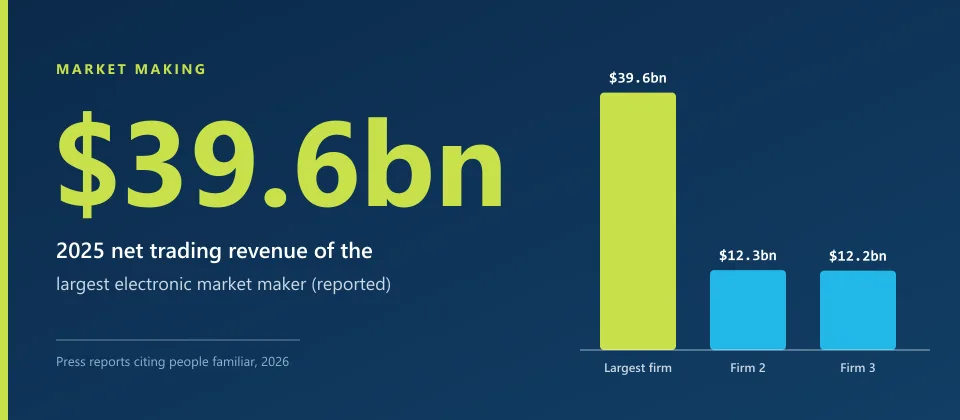
Spread capture is only the starting point. A practitioner’s view of market-making economics: rebates, adverse selection, inventory risk, the models behind quoting and what 2025’s record revenues say about the business.

Key concepts

Adverse selection
Losses from trading with better-informed counterparties.
Inventory risk
Exposure to price moves from positions accumulated while providing liquidity.
Maker-taker
A fee model that pays rebates to liquidity providers and charges liquidity takers.

Research roadmap

What we cover in Market Making

Our editorial plan for this section. Published guides are linked; the rest are in research.

  • Live How Market Makers Make Money (and How They Lose It)
  • Soon Adverse Selection: The Market Maker's Biggest Cost
  • Soon The Avellaneda-Stoikov Market Making Model Explained
  • Soon How Options Market Making Works
  • Soon 0DTE Options: Market Structure and Market Maker Hedging
  • Soon Hedging Strategies Used by Market Makers
  • Soon Inside the Market Making Industry