
Spoofing and Layering Explained
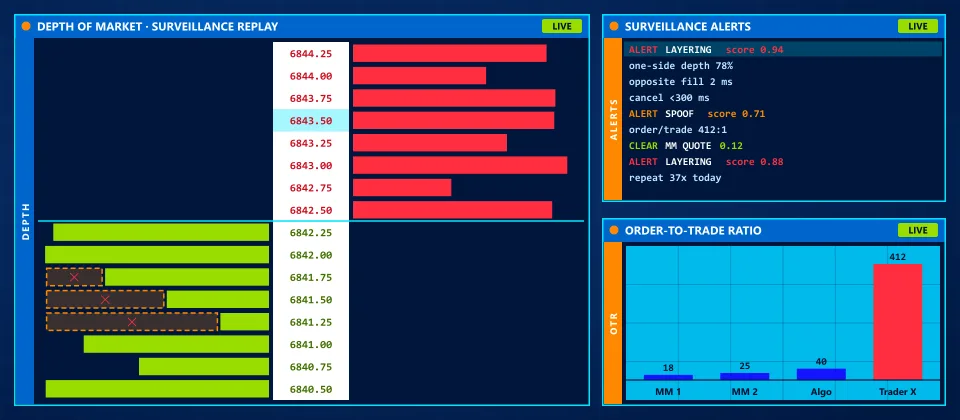
Fake orders, real profits — until surveillance catches them. How spoofing and layering work, which laws prohibit them, how regulators detect them and where legitimate order cancellation ends.

Spoofing, layering, quote stuffing, momentum ignition and the rules that govern algorithmic and high-frequency trading in the US, EU and Asia.
Algorithmic trading operates under detailed rules on market access, testing, record keeping and conduct. Knowing where legitimate speed ends and manipulation begins is essential for every desk.
We explain the main abuse patterns, landmark enforcement cases and the regulatory frameworks that apply to HFT and algorithmic firms.
Fake orders, real profits — until surveillance catches them. How spoofing and layering work, which laws prohibit them, how regulators detect them and where legitimate order cancellation ends.
Research roadmap
Our editorial plan for this section. Published guides are linked; the rest are in research.