
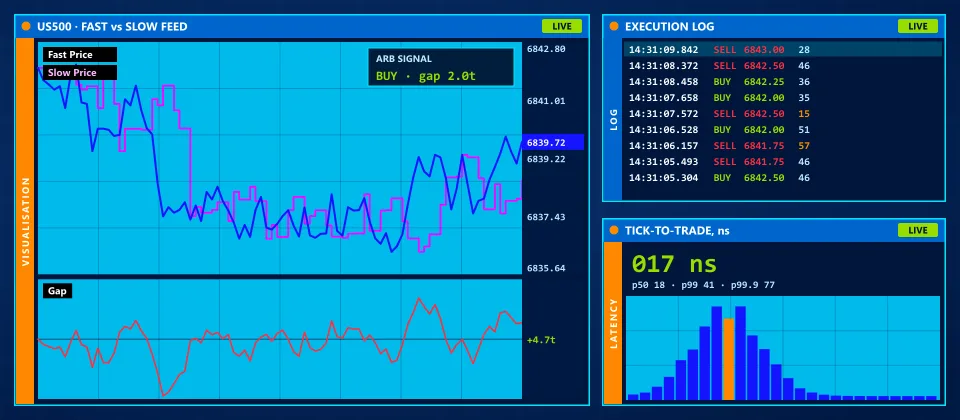
Latency Arbitrage: How Speed Turns Into Profit
Microsecond races decide a fifth of trading volume in some markets. How latency arbitrage works, what the regulator data show, who wins and how exchanges are redesigning around it.

Market structure intelligence
Source-linked research on microstructure, arbitrage, trading infrastructure and institutional liquidity — written for trading firms, brokers and liquidity providers.
Featured guide
Microsecond races decide a fifth of trading volume in some markets. How latency arbitrage works, what the regulator data show, who wins and how exchanges are redesigning around it.
Coverage map
Sixteen research areas, from the order book to the subsea cable. Each one starts with a pillar guide and grows into a complete library.
Market Structure
How electronic markets really work: limit order books, order flow, toxicity, price discovery and the mechanics behind every fill.
1 guideSmart order routing, direct market access, payment for order flow, internalisation, execution algorithms and transaction cost analysis.
1 guideAnalysis of the changes reshaping trading: 24-hour equities, the EU consolidated tape, T+1, prediction markets and landmark regulatory cases.
1 guideSpoofing, layering, quote stuffing, momentum ignition and the rules that govern algorithmic and high-frequency trading in the US, EU and Asia.
1 guideInfrastructure
Microwave, millimetre wave, hollow-core fiber, shortwave radio and subsea cables: the physics and routes of ultra-low latency trading networks.
1 guideExchange colocation and the data centers that host global trading: NY4, LD4, CME Aurora, Mahwah, Carteret, TY3 and exchange cloud migration.
1 guideFIX, Nasdaq ITCH and OUCH, Simple Binary Encoding, CME MDP 3.0, NYSE Pillar, multicast market data and crypto exchange APIs.
1 guideFPGAs, tick-to-trade latency, kernel bypass networking, smart NICs, layer 1 switches, Linux tuning and low-latency C++.
1 guidePrecision Time Protocol, White Rabbit, GPS timing and MiFID II RTS 25 clock synchronisation for trading infrastructure.
1 guideLiquidity & Markets
Direct feeds versus SIP, tick data, Level 2 and Level 3 order book data, normalisation, licensing and the economics of market data.
1 guideHow institutional FX liquidity works: bank and non-bank LPs, prime brokerage, prime of prime, last look, aggregation, A-book/B-book and toxic flow.
1 guideHow market makers earn and lose money: spread capture, rebates, adverse selection, inventory risk, optimal quoting models and options market making.
1 guideCentralised and decentralised crypto venues, perpetual futures and funding, MEV, CEX-DEX arbitrage, on-chain order books and crypto prime brokerage.
1 guideStrategy & Research
Latency, triangular, cross-exchange, intercontinental and statistical arbitrage: mechanics, economics, infrastructure and market-design responses.
1 guideTime series foundation models, deep learning on order books, reinforcement learning for market making, ML in HFT and LLM trading agents.
1 guideWhat high-frequency trading is, how HFT firms make money, the core strategies, the history of the industry and how it is organised today.
1 guide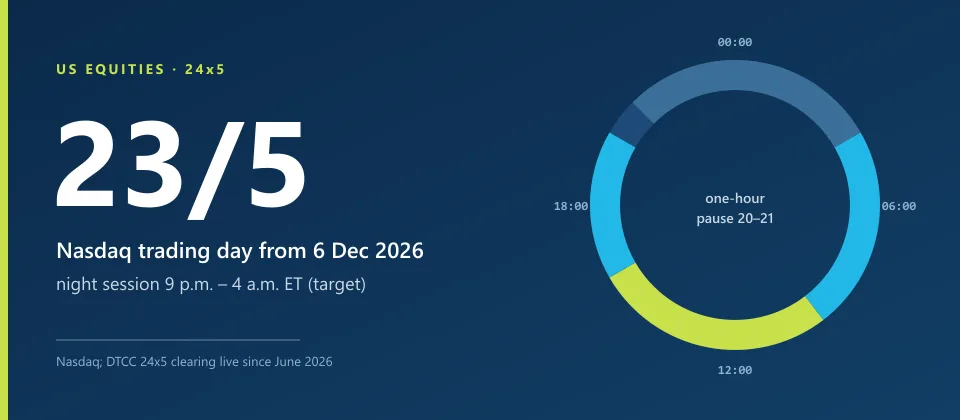
Nasdaq targets a 23-hour trading day from December 2026, DTCC already clears 24x5 and brokers route overnight orders to ATSs. What the overnight session looks like — and what it means for liquidity providers.
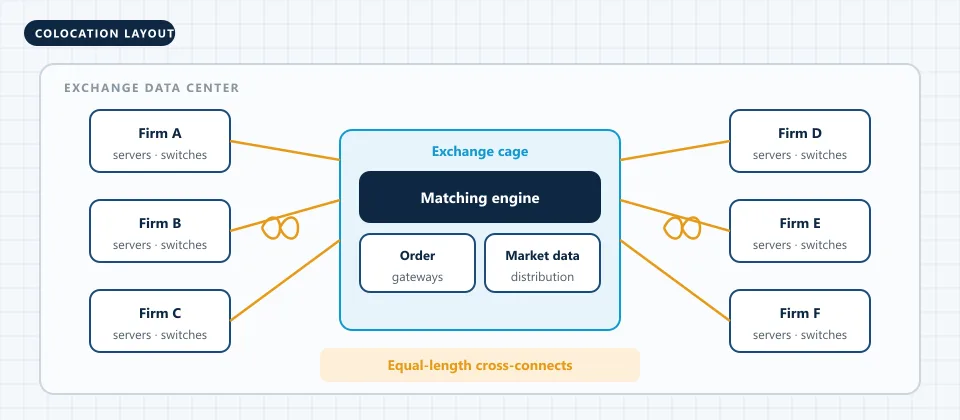
Why trading firms put servers next to matching engines, how colocation is priced and regulated, the data centers that matter in 2026 — and what cloud-hosted exchanges change.
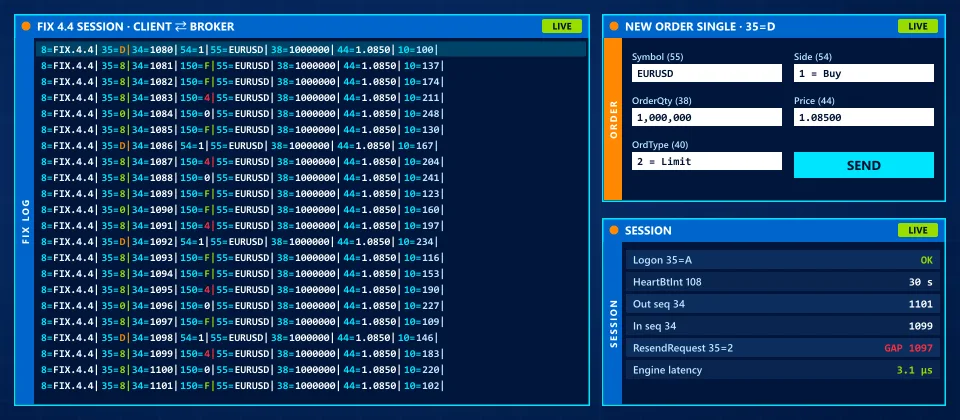
How FIX messages are built, how sessions recover from gaps, which version to use, and where binary encodings like SBE and FIXP fit — a practitioner’s guide to the language of trading.
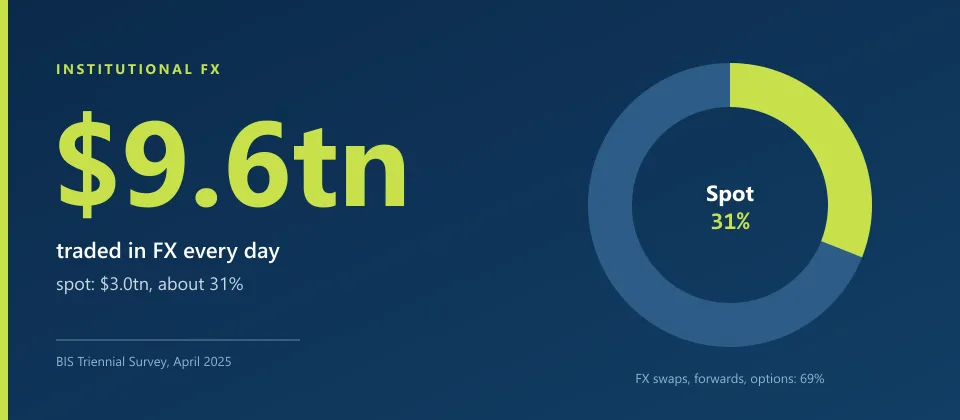
Spot FX trades about $3 trillion a day through layers of banks, non-bank market makers, prime brokers and venues. How that liquidity chain works — and how to judge the LPs in it.
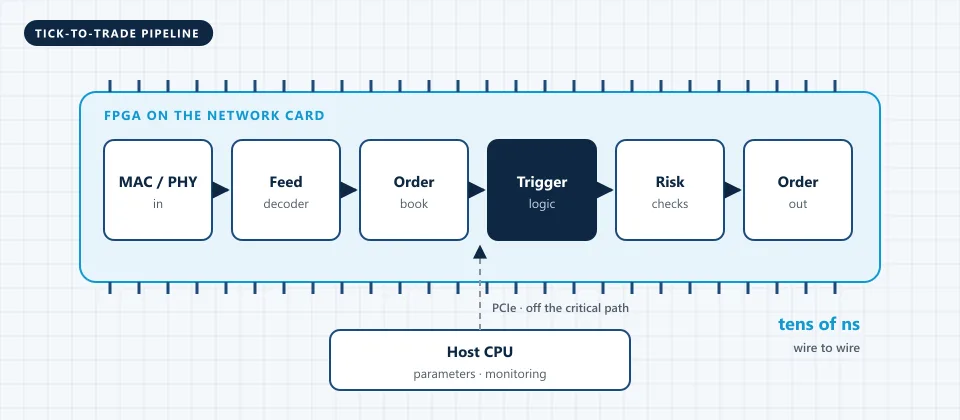
Why trading firms moved the critical path from CPUs to FPGAs, what runs in hardware, how teams build it, what it costs — and when software is still good enough.
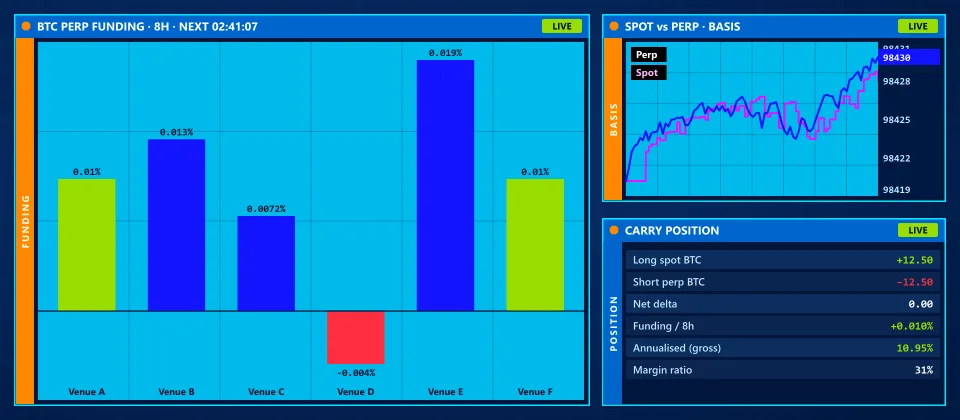
Long spot, short perpetual, collect funding. How the trade really works, what the funding formula implies for returns, and the exchange, liquidation and regime risks that decide whether it pays.
How we research
Every number on Westernpips Pro links back to where it came from: regulator papers, exchange specifications, academic research and venue rule filings.
Our research desk is built by people who design and run low-latency trading software. We write for readers who already know what a cross-connect is — clearly enough that a new analyst can follow, precisely enough that a CTO will not wince.
Read our editorial policy