
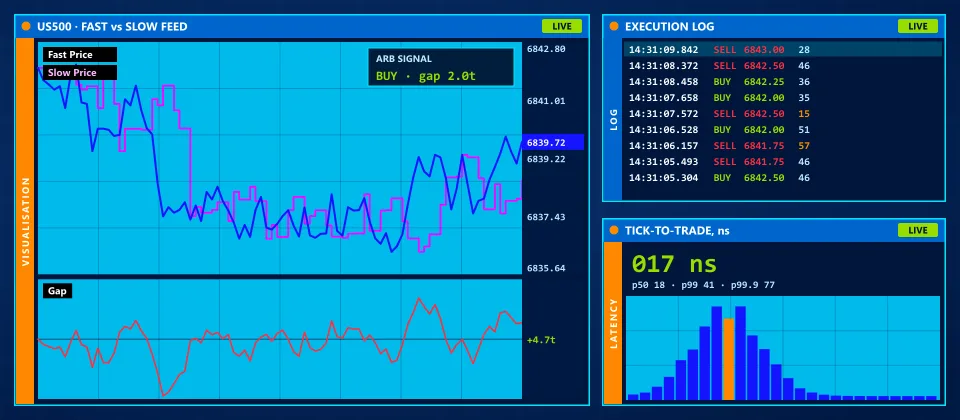
Latency Arbitrage: How Speed Turns Into Profit
Microsecond races decide a fifth of trading volume in some markets. How latency arbitrage works, what the regulator data show, who wins and how exchanges are redesigning around it.

Latency, triangular, cross-exchange, intercontinental and statistical arbitrage: mechanics, economics, infrastructure and market-design responses.
Arbitrage keeps related prices in line across venues, instruments and continents. In modern electronic markets most arbitrage is a race measured in microseconds, and its economics are shaped as much by market design as by trading skill.
We explain how each arbitrage family works, what infrastructure it needs, what the academic and regulatory evidence says about its costs and benefits, and how exchanges respond with speed bumps, auctions and randomisation.
Microsecond races decide a fifth of trading volume in some markets. How latency arbitrage works, what the regulator data show, who wins and how exchanges are redesigning around it.
Research roadmap
Our editorial plan for this section. Published guides are linked; the rest are in research.